
The Natural Antioxidant Solution for Solid Sunscreens
More information
Bioxan®
The global suncare market is undergoing a transformation as consumers increasingly seek products that combine high efficacy with enhanced usability and convenience. Among emerging trends, solid sunscreen sticks are rapidly gaining popularity, favored by both consumers and brands for their ease of use, portability, and mess-free application — all aligning with today’s on-the-go lifestyle.
Unlike traditional lotions and sprays, solid sunscreen sticks offer precise, targeted protection, making them ideal for delicate and hard-to-reach areas such as the face, lips, and eye contour. Their compact, travel-friendly design eliminates the risk of spills, making them perfect for daily use, outdoor activities, and travel. Consumers also value their rich, emollient textures that glide smoothly over the skin.
Waterless Beauty
Another factor driving the rise of solid sunscreens is the waterless beauty movement — a global push to reduce water use in cosmetics. As environmental awareness grows, consumers and brands are turning to more sustainable, eco-friendly solutions. Solid formats naturally require little to no water, aligning well with this trend. They also offer better stability and longer shelf life, reducing the need for preservatives.
However, behind the appeal of solid and waterless formats lies a technical challenge for formulators. Developing stable, effective sunscreen sticks is complex, especially when using high concentrations of lipophilic ingredients like plant oils, butters, and waxes. While these ingredients nourish the skin, they are prone to oxidative degradation, which can compromise both performance and sensory quality over time.
With growing demand for clean-label, natural, and high-performance suncare, ensuring oxidative stability has become a key priority for cosmetic chemists and developers. Choosing the right antioxidant system is crucial to preserve product quality, maintain efficacy, and protect brand reputation in a competitive market.
Formulation challenges: Why stability matters
While sun sticks offer practical benefits to consumers, formulators face multiple risks during development and shelf life:
- High risk of lipid oxidation, leading to rancidity and reduced active ingredient performance.
- Organoleptic changes — undesirable alterations in color, odor, and texture.
- Decreased product stability when exposed to heat, UV light, and oxygen.
- Shelf life reduction, affecting both product quality and brand reputation.
Oxidative degradation not only compromises the sensorial experience but can also impact the overall efficacy of the suncare protection, making oxidative stability a top priority in solid formulation development.
Btsa’s solution: Bioxan® — Natural antioxidants for solid suncare formulas
At Btsa, we specialize in providing natural-origin antioxidant solutions tailored for cosmetic formulations with high lipid content.
Bioxan® is a range of tocopherol-based natural antioxidants, specifically developed to protect sensitive, lipophilic ingredients like oils, butters, and waxes in solid suncare products.
Bioxan® offers:
- Protection against oxidative degradation in solid formulations.
- Prevention of organoleptic deterioration, maintaining product color, odor, and texture.
- Extended product shelf life and preserved formulation performance.
- COSMOS certification, ensuring compliance with natural and organic standards.
Experts in oxidative stability testing for solid formulations
At Btsa, we don’t just supply antioxidants , we help formulators measure and optimize oxidative stability. Our in-house technical laboratory is equipped with advanced stability analysis tools, offering formulators a scientific, data-driven approach to protect their products.
Our analytical capabilities include:
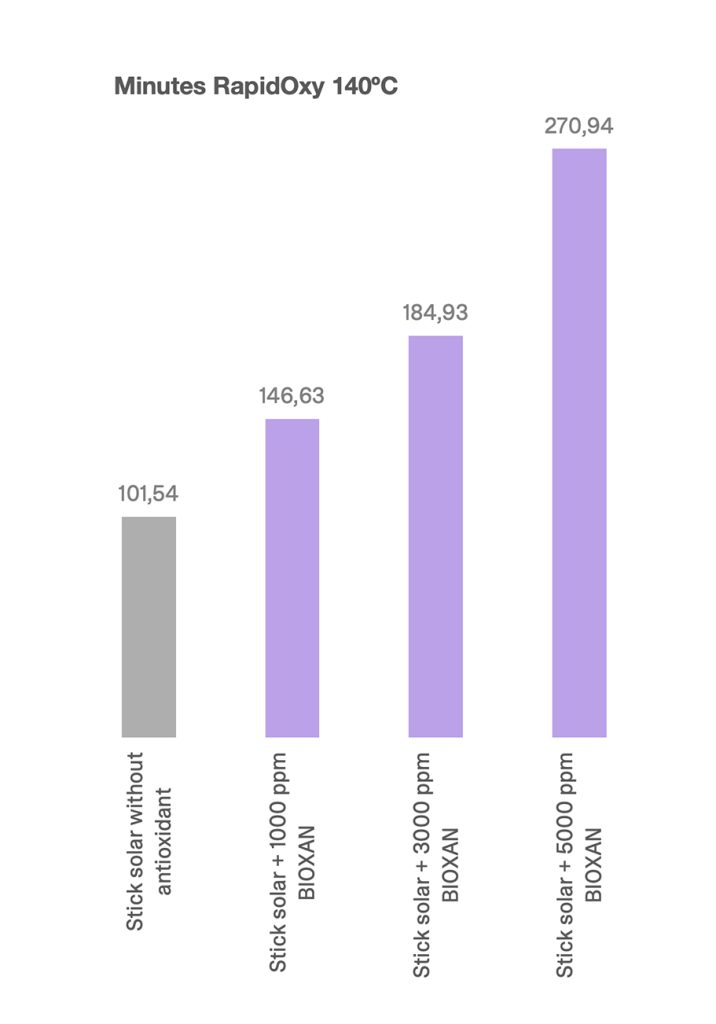
- RapidOxy® technology: A high-precision, accelerated oxidation test specifically suited for solid and semi-solid formulations. This equipment determines oxidative stability under controlled pressure and temperature, predicting shelf life and formulation robustness in a short time.
- Colorimetry analysis: Essential for monitoring color changes over time in solid suncare products, helping to maintain product appearance and consumer acceptance throughout shelf life.
With these tools, we support our clients in validating antioxidant performance and optimizing formulations before market launch.
Bioxan® CASE STUDY:
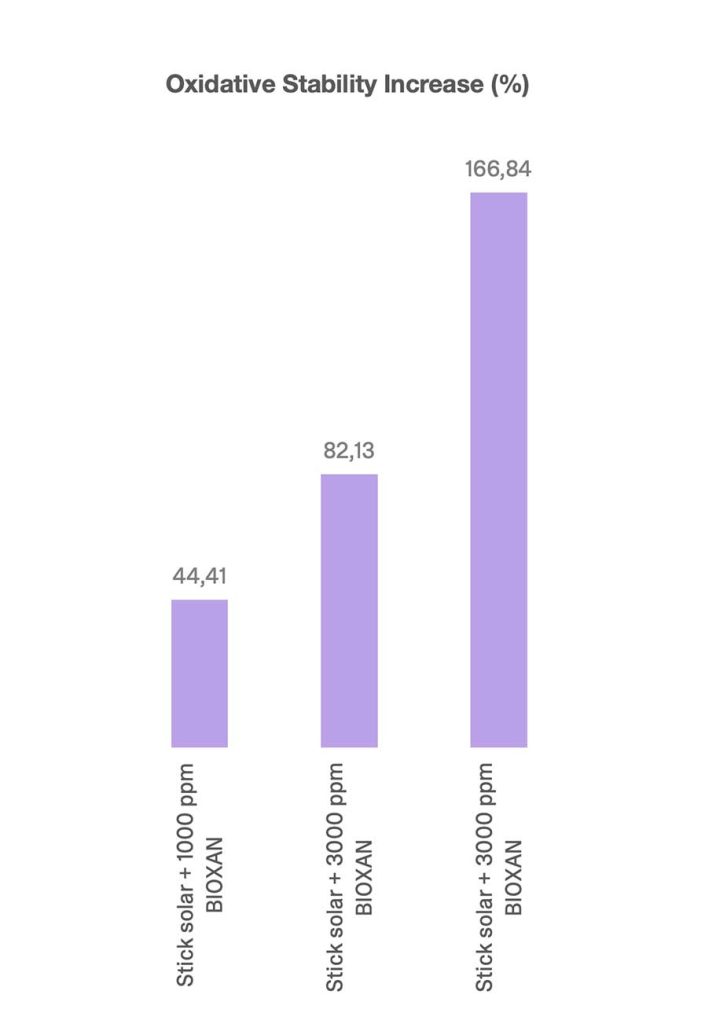
At Btsa’s technical laboratory, we carried out a case study to evaluate the oxidative stability of a solid sunscreen stick using the RapidOxy® accelerated oxidation test. The formulation was tested with Bioxan® at 1000 ppm, 3000 ppm, and 5000 ppm to measure its protective effect against lipid oxidation.
Results showed a clear improvement in oxidative stability. Bioxan® significantly extended the product’s resistance to oxidation, confirming its effectiveness in protecting lipophilic ingredients and enhancing shelf life in solid suncare formulations.
More information